As a step stool supplier, I understand the importance of ensuring the quality of the products we offer. Customers rely on step stools for various tasks, from reaching high shelves to assisting children in the bathroom. Therefore, a high - quality step stool is not only a matter of customer satisfaction but also a safety concern. In this blog, I will share how I check the quality of a step stool.
1. Material Inspection
The first step in checking the quality of a step stool is to examine the materials used in its construction. Different types of materials have different characteristics, and each material's quality can significantly impact the overall performance and durability of the step stool.
Wood
If the step stool is made of wood, I look for signs of high - grade wood. High - quality wood should be free from knots, cracks, and warping. Knots can weaken the structure of the wood, making it more prone to breakage under stress. Cracks are obvious signs of damage, and warping can affect the stability of the step stool. I also check the type of wood. Hardwoods like oak and maple are generally more durable and can withstand heavier loads compared to softwoods. Additionally, the finish on the wood is crucial. A smooth, even finish not only enhances the appearance of the step stool but also protects the wood from moisture and wear.
Plastic
For plastic step stools, I assess the thickness and density of the plastic. Thicker plastic is generally stronger and more resistant to deformation. I also check for any signs of brittleness. A brittle plastic step stool may crack or break easily, especially if it is dropped or subjected to sudden impacts. The plastic should be of a high - quality grade that is resistant to chemicals and UV rays, especially if the step stool is intended to be used outdoors.
Metal
In the case of metal step stools, I examine the gauge of the metal. A thicker gauge metal is stronger and more durable. I check for rust or corrosion, especially if the metal is exposed. Rust can weaken the metal over time, compromising the safety of the step stool. The metal should also be properly finished, such as powder - coating, to protect it from the elements and prevent scratching.
2. Structural Integrity
The structural integrity of a step stool is vital for its safety and functionality. I conduct a series of tests to ensure that the step stool can withstand the intended use.
Load - Bearing Capacity
One of the most important aspects is the load - bearing capacity. I test the step stool by applying a gradually increasing load to the steps. The step stool should be able to support the weight it is rated for without any signs of bending, cracking, or collapsing. For example, if a step stool is rated to hold 250 pounds, I will apply a load close to this limit for a certain period to simulate real - world use.
Joint and Connection Quality
The joints and connections of the step stool are critical points. I check the tightness of screws, bolts, and welds. Loose connections can cause the step stool to wobble, increasing the risk of accidents. For example, in a folding step stool, the hinges should be well - made and able to withstand repeated folding and unfolding. I also look for any signs of stress at the joints, such as cracks or deformation.
Stability
Stability is another key factor. I place the step stool on a flat surface and apply a lateral force to see if it tips over easily. A stable step stool should have a wide base and a low center of gravity. For step stools with adjustable legs, I ensure that the legs can be adjusted smoothly and securely. The step surface should also be level and non - slippery. I test the non - slip feature by walking on the steps with different types of shoes, including smooth - soled shoes.
3. Design and Functionality
The design and functionality of a step stool can also reflect its quality.


Step Size and Height
The size and height of the steps are important for user comfort and safety. The steps should be wide enough to provide a stable footing. A narrow step can make it difficult for users to stand securely. The height between steps should be consistent and appropriate for easy climbing. For example, in a multi - step stool, the height difference between each step should be within a reasonable range to prevent users from tripping.
Folding and Storage Features
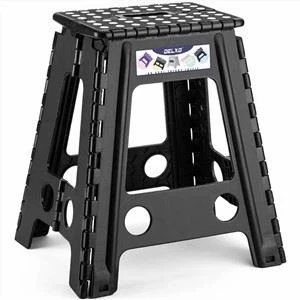
If it is a folding step stool, I check the ease of folding and unfolding. The folding mechanism should be smooth and require minimal effort. The step stool should also be able to fold flat for easy storage. For example, our 13" Folding Step Stool and 18" Folding Step Stool are designed with a simple and efficient folding mechanism.
Special Features
Some step stools come with special features, such as non - slip pads, handrails, or storage compartments. I test these features to ensure they work as intended. Non - slip pads should provide good traction, handrails should be firmly attached and able to support the user's weight, and storage compartments should be spacious and easy to access. For instance, our 9" Practical Non - slip Simple Folding Step Stool is equipped with high - quality non - slip pads for enhanced safety.
4. Regulatory Compliance
To ensure the highest quality and safety standards, step stools should comply with relevant regulations.
National and International Standards
I check if the step stools meet national and international standards, such as ASTM (American Society for Testing and Materials) standards in the United States or EN (European Norm) standards in Europe. These standards cover various aspects of step stool design, construction, and performance, including load - bearing capacity, stability, and non - slip requirements. Compliance with these standards is a sign of a well - made and safe step stool.
Safety Labels and Instructions
The step stools should have clear safety labels and instructions. The labels should indicate the maximum load capacity, any warnings or precautions, and proper usage guidelines. The instructions should be easy to understand and provide clear steps for assembly, use, and maintenance.
5. Customer Feedback and Testing
Finally, I value customer feedback and conduct user testing.
User Testing
I organize user testing sessions where different people, including those of different ages and body types, use the step stools. I observe their interactions with the step stools, such as how they climb the steps, how easy it is for them to fold or unfold the stools, and if they feel safe using them. Based on the feedback from these tests, I can identify any potential issues and make improvements.
Customer Reviews
I also pay close attention to customer reviews. Customers' real - world experiences can provide valuable insights into the quality and performance of the step stools. Positive reviews often indicate that the step stools meet or exceed customer expectations, while negative reviews can highlight areas that need improvement.
If you are interested in purchasing high - quality step stools, whether it is our Two Step Baby Step Stool for your little ones or Plastic Bathtub Bath Step Stool for bathroom use, please feel free to contact me for further details and to discuss your purchasing needs. We are committed to providing the best step stools in the market.
References
- ASTM International. (Year). Standard consumer safety specification for household stepstools.
- European Committee for Standardization. (Year). EN standards for step stools.